Email is one of the most widely used communication tools on the internet. Whether you are creating accounts, signing up for services, shopping online, or communicating professionally, email plays an essential role in everyday digital life. However, not all email addresses are the same.
Today, users have two main options when it comes to receiving emails online: personal email accounts and temporary email addresses. Personal email accounts are long-term addresses used for regular communication, while temporary email addresses are short-term inboxes designed for quick and disposable use.
Many people are not fully aware of the differences between these two types of email services. As a result, they may use the wrong type of email for certain situations, which can lead to problems such as spam, inbox clutter, or privacy risks.
Understanding the difference between temporary email and personal email helps users make better decisions when interacting with websites, registering for services, or protecting their online privacy.
In this article, we will explain what temporary email and personal email are, how they work, their advantages and limitations, and when you should use each one.
What Is a Personal Email?
A personal email is a permanent email account created through a traditional email provider. Examples include common email services that people use daily for communication, account registrations, and online transactions.
Personal email accounts are typically created through a registration process where users provide information such as their name, password, and sometimes a phone number for verification.
Once created, the email account remains active indefinitely unless the user deletes it. These email addresses are designed for long-term use and allow users to store messages, send emails, organize folders, and communicate with others.
Personal email accounts are commonly used for:
-
Professional communication
-
Personal conversations
-
Online banking and financial services
-
Social media accounts
-
Shopping and subscriptions
-
Work and business communication
Because personal email addresses are connected to many important services, they often contain sensitive information and must be protected carefully.
What Is Temporary Email?
Temporary email, also known as disposable email or temp mail, is a short-term email address that users can create instantly without registration.
Unlike personal email accounts, temporary email services do not require users to provide personal information or create passwords. Instead, the system automatically generates an email address that can receive messages for a limited time.
After a certain period, the email address and all received messages are automatically deleted.
Temporary email services are commonly used for situations where users want to receive an email quickly without exposing their personal inbox.
These addresses are typically used for:
-
Quick website registrations
-
Downloading resources
-
Testing websites or applications
-
Avoiding spam emails
-
Protecting personal email privacy
Temporary email services are designed for convenience and privacy rather than long-term communication.
Key Differences Between Temporary Email and Personal Email
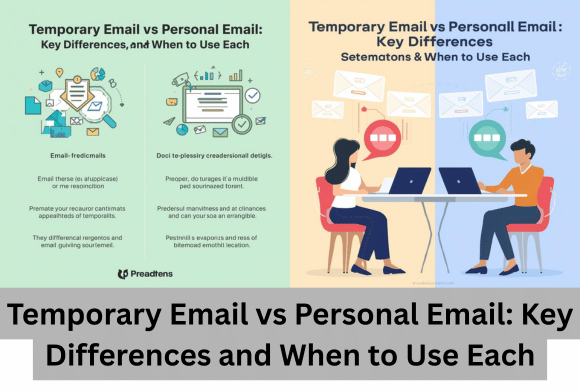
Understanding the differences between temporary email and personal email helps users choose the right option depending on the situation.
Duration of Use
One of the biggest differences is how long the email address remains active.
Personal email accounts are permanent and remain active for years as long as the user maintains the account.
Temporary email addresses, on the other hand, exist only for a short period. Some may last for a few minutes, while others may remain active for several hours.
Once the time expires, the email address disappears automatically.
Registration Requirements
Creating a personal email account usually requires a sign-up process. Users must create a username, password, and sometimes verify their phone number.
Temporary email services require no registration. The email address is generated instantly when the user visits the service.
This makes temporary email much faster to access.
Privacy Protection
Personal email accounts are linked to a user's identity and may contain personal information.
Temporary email addresses provide greater anonymity because they are not connected to personal details.
This makes temporary email useful when users want to protect their identity online.
Email Storage
Personal email services allow users to store messages for long periods. Users can organize emails into folders, search for old messages, and maintain records.
Temporary email services store messages only for a limited time before automatically deleting them.
This means users cannot rely on temporary email for long-term storage.
Security Level
Personal email accounts typically offer security features such as passwords, two-factor authentication, spam filters, and encryption.
Temporary email services generally do not provide advanced security features because they are designed for short-term use.
For this reason, temporary email should not be used for important or sensitive communication.
Advantages of Personal Email
Personal email accounts provide several important benefits.
Reliable Communication
Personal email addresses are designed for long-term communication. Users can send and receive messages anytime without worrying about the address expiring.
This makes them suitable for personal, professional, and business use.
Secure Access
Most personal email providers include strong security features such as password protection and account recovery options.
These features help protect users from unauthorized access.
Long-Term Storage
Personal email services allow users to keep messages for years. This is important for maintaining records, saving important documents, or referencing past conversations.
Integration With Online Services
Many online platforms require a permanent email address for account management.
Using a personal email ensures that users can reset passwords, receive notifications, and manage their accounts easily.
Advantages of Temporary Email
Temporary email services also offer several benefits, especially when privacy and convenience are important.
Protects Your Main Inbox
Using temporary email for website registrations prevents spam messages from entering your personal inbox.
Over time, this helps keep your main email clean and organized.
Fast and Easy to Use
Temporary email addresses are generated instantly without requiring registration.
Users can start receiving emails immediately.
Improves Online Privacy
Temporary email helps protect personal information by preventing websites from collecting your real email address.
This reduces the risk of data exposure.
Useful for Testing
Developers and testers often use temporary email addresses to check email verification systems and notification features.
Limitations of Personal Email
While personal email accounts are useful, they also have some disadvantages.
Spam Emails
When users share their email addresses with many websites, they often receive a large number of marketing messages and newsletters.
Privacy Risks
If a website experiences a data breach, email addresses stored in the database may be exposed.
This can lead to spam or phishing attacks.
Inbox Overload
Over time, personal email inboxes can become crowded with promotional emails, making it difficult to find important messages.
Limitations of Temporary Email
Temporary email services also have certain limitations.
Short Lifespan
Temporary email addresses expire quickly, which means users cannot access the inbox after the expiration time.
Not Suitable for Important Accounts
Because temporary email addresses disappear, they should never be used for services that require long-term access.
Limited Security
Most temporary email services do not provide advanced security features such as passwords or account recovery.
When Should You Use Temporary Email?
Temporary email is most useful in situations where users need quick access without sharing their personal email.
Common situations include:
-
Registering on websites that require email verification
-
Downloading free resources
-
Accessing online trials
-
Testing website features
-
Avoiding promotional emails
Using temporary email in these cases helps protect privacy and reduce spam.
When Should You Use Personal Email?
Personal email accounts should be used for any activity that requires long-term communication or account management.
Examples include:
-
Banking and financial services
-
Work and business communication
-
Social media accounts
-
Online shopping accounts
-
Educational platforms
-
Subscription services
These activities require secure access and long-term communication, making personal email the better option.
Combining Both Email Types for Better Privacy
Many internet users combine both types of email to improve privacy and organization.
For example, they may use:
Personal email for important accounts and communication.
Temporary email for quick sign-ups and one-time verifications.
This strategy allows users to enjoy the benefits of both systems while minimizing risks.
Using temporary email for non-essential services reduces spam and protects the personal inbox.
Why Disposable Email Is Becoming Popular
As internet usage grows, more websites require users to create accounts before accessing services.
This trend has increased the number of marketing emails and promotional messages people receive.
Users are becoming more aware of privacy risks and looking for ways to control their personal information.
Temporary email services provide a simple solution by allowing users to interact with websites without sharing their real email address.
Because of this, disposable email services are becoming increasingly popular among internet users worldwide.
The Future of Email Privacy
Online privacy continues to be an important concern for internet users.
Companies are collecting large amounts of data, and cyber threats such as phishing attacks and data breaches are becoming more common.
Temporary email services are expected to evolve with better features, faster email delivery, and improved privacy protection.
At the same time, email providers are improving spam filters and security systems to protect personal email accounts.
Users who understand how to manage their email usage effectively will be better prepared to protect their privacy online.
Conclusion
Both temporary email and personal email serve important purposes in the digital world.
Personal email accounts are designed for long-term communication, secure access, and managing important online accounts.
Temporary email addresses are designed for short-term use, allowing users to receive emails quickly while protecting their personal inbox.
Understanding the differences between these two types of email helps users make smarter decisions when interacting online.
By using temporary email for quick registrations and personal email for important services, users can maintain better privacy, reduce spam, and keep their inbox organized.
Choosing the right type of email for the right situation is an effective way to improve both convenience and online security.